
Brooklyn Center City Directory Shelves
Brooklyn Center has a distinct digitized historical-directory run rather than an undifferentiated county collection. Hennepin County Library identifies its ResCarta set as Brooklyn Center Historical Directories, 1966–1982. That Brooklyn Center run is the best starting point for a dated street or household observation. It should not be relabeled with a publisher name, because the accessible HCLib announcement does not state one. Other HCLib directory scans chiefly cover Minneapolis and selected suburbs, while Brooklyn Center print and digital suburb holdings may require a catalog or Special Collections check.
| Collection | Years | Where held | Access |
|---|---|---|---|
| Brooklyn Center historical volumes | 1966–1982 | HCLib ResCarta | Digitized scans online |
| Brooklyn Center telephone directories | 1927–1990s and later holdings | MNHS finding aid and shelf or microfiche locations | Collection-based access |
| Brooklyn Center HCLib directory leads | Minneapolis 1859–1950; suburb coverage varies | HCLib Digital Collections | Online collection |
| Brooklyn Center suburb holdings | Collection-specific | HCLib catalog and Special Collections | Ask staff or check holdings |
| Brooklyn Center MNHS staff search | One city and name, up to five years | Minnesota Historical Society | Order a staff search |
For Brooklyn Center, the collection names matter. A telephone book records subscribers, while a historical directory may supply a household-oriented line, business reference, and local notation. Neither is a census, deed, or present-day identity record.
Brooklyn Center Digitized Directory Scans
HCLib announced the newly available Brooklyn Center 1966–1982 run in a 2025 Special Collections update. That is a practical change for a Brooklyn Center historical search: a Brooklyn Center reader can test a name or street in the digitized series before requesting a shelf item or a staff search. The announcement establishes the years and availability, not a specific publisher. Check item metadata when a Brooklyn Center citation needs that detail.
The Hennepin ResCarta collection browser displays the Brooklyn Center directory collection.
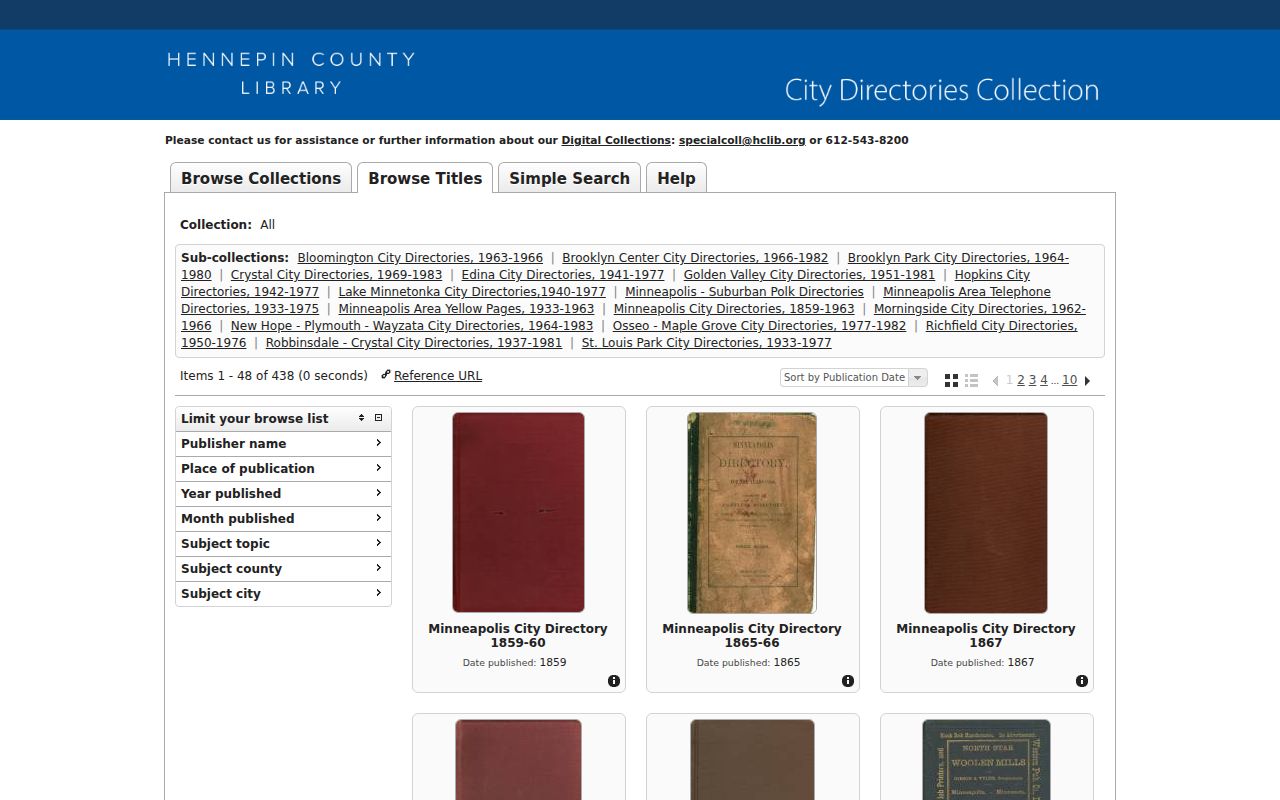
Use the collection label and the printed volume year as the citation for each Brooklyn Center directory observation, since no live scanned entry page was retained in the research materials.
For Brooklyn Center searches, terms are case-insensitive. HCLib permits * and ? wildcards except at the first character, but does not support Boolean operators or quotation marks. The previous and next arrows are useful when an abbreviated name produces several hits.
Note: A 2026 HCLib archival update also reports continuing digitization work, so Brooklyn Center collection finding aids are worth checking again before a return visit.
Brooklyn Center Telephone Directory Years
The separate Hennepin telephone-directory series reaches further back than the Brooklyn Center digitized volumes. The MNHS finding aid lists Brooklyn Center yellow pages for 1927 and 1928, then 1949 and 1953, followed by 1957–1980 with year-specific yellow-page gaps, 1981–1985, and 1986–1990 with later holdings listed. These Brooklyn Center dates create a useful bridge, but a subscriber listing does not establish every person who lived at an address.
The MNHS telephone-directory finding aid distinguishes the physical and microfiche material. For Brooklyn Center, record whether a hit came from white pages, yellow pages, or a business heading. That detail explains why one year can show a name while another does not.
The HCLib Digital Collections include Brooklyn Center directory leads, phone books, and reverse-address material for some runs.
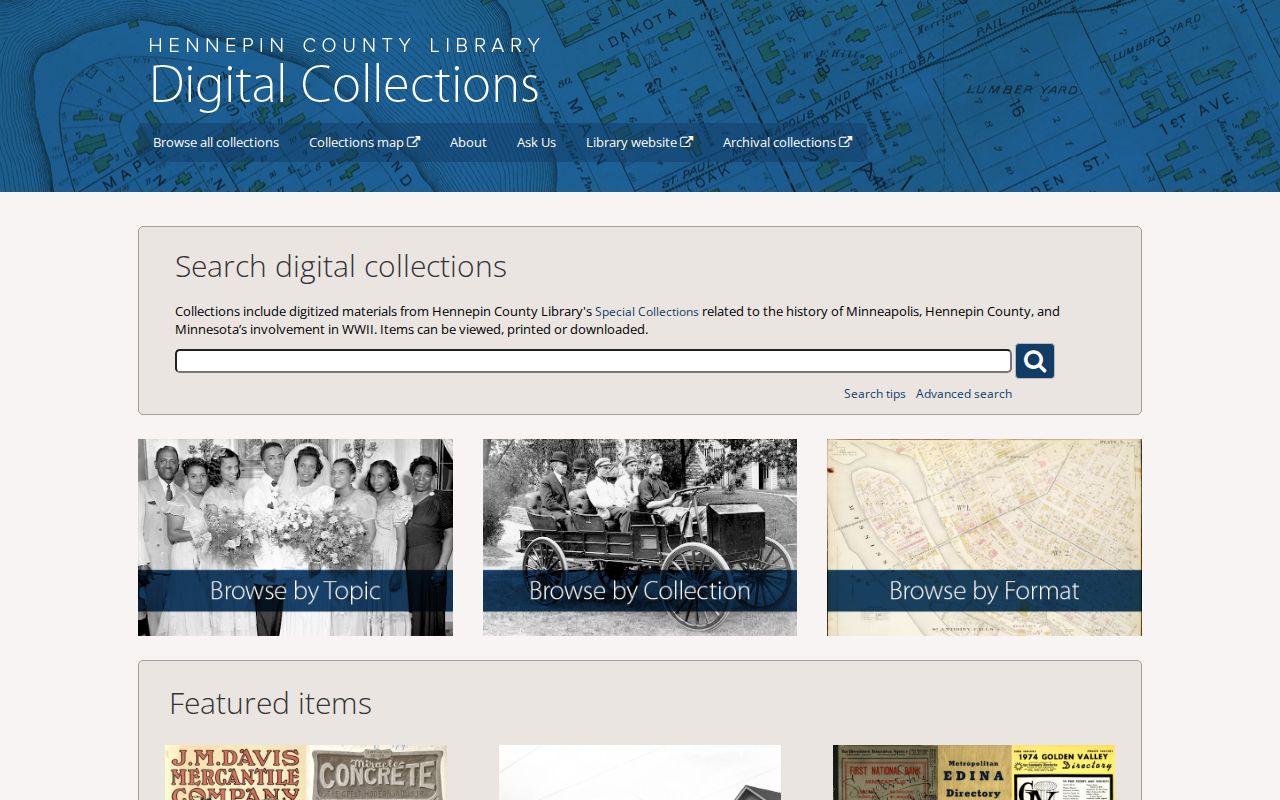
Brooklyn Center reverse-address material is especially helpful when an old address is known but a surname has changed, though it must be read as the particular volume’s coverage, not as a complete resident roll.
Reading a Brooklyn Center Historical Directory Line
A line in a Brooklyn Center historical directory is a dated observation. It can place a surname, initials, spouse or relationship notation, street address, unit, resident marker, telephone number, business listing, or a historical activity description together. It does not prove a deed transfer or continuous presence. In Brooklyn Center volumes, women can appear in a spouse’s parenthetical notation, as independent, or as widowed; minors often do not appear in the staff-search products.
| Name form | Surname, given name, initials, or an abbreviation such as Wm, Chas, or Geo |
|---|---|
| Relationship clue | A spouse in parentheses, an independent listing, or a widow notation |
| Address line | Street number, street, and an apartment or room when printed |
| Volume marker | Home, resident, or business notation that must be read from that volume’s key |
| Historical context | Telephone number, business reference, repeated ditto mark, or activity description |
- Criss-cross directory
- A reverse section arranged by address or street, useful for finding names connected to one printed location.
- Householder index
- An index that points to a household line rather than guaranteeing that everyone at the address is listed.
- Abbreviation key
- The volume-specific legend that explains marks such as
b,r, orh; preserve it with the result.
Do not invent a sample entry from these field types. The research captured Brooklyn Center directory conventions, not a verified page for a named household.
Brooklyn Center Directory Search Marks
Brooklyn Center directory notation can make an exact search fail. For a Brooklyn Center suburban address, HCLib advises trying the usual street form, a wildcard version, and in some volumes a leading h or r before the number, such as h4521 Oakland. Search the prior and next hit instead of relying on a single match. Ditto marks and an initial-only line can carry forward the surname or address from the line above.
A Brooklyn Center working note records the search string, directory year, page, printed line, volume key, resident marker, phone, relationship notation, and any business cross-reference. That preserves enough context to tell a changed marker from a changed household.
Note: A missing exact-address hit may reflect a volume gap, telephone-only coverage, abbreviation change, or address convention rather than a confirmed move.
Brooklyn Center Directory Research Desks
Hennepin County Library genealogy and local history resources are the first practical route for Brooklyn Center directories, maps, newspapers, yearbooks, and licensed family-history tools. Brookdale Library is at 6125 Shingle Creek Parkway, Brooklyn Center, MN 55430, and its public phone is 612-543-5600. It opened in 1981 and reopened in 2004. Staff can direct a Brooklyn Center reader toward catalog holdings, Special Collections, and the digital collections when an online year is missing.
The HCLib local-history service shows the kinds of directory, map, newspaper, and database material that can help frame a Brooklyn Center historical-directory result.
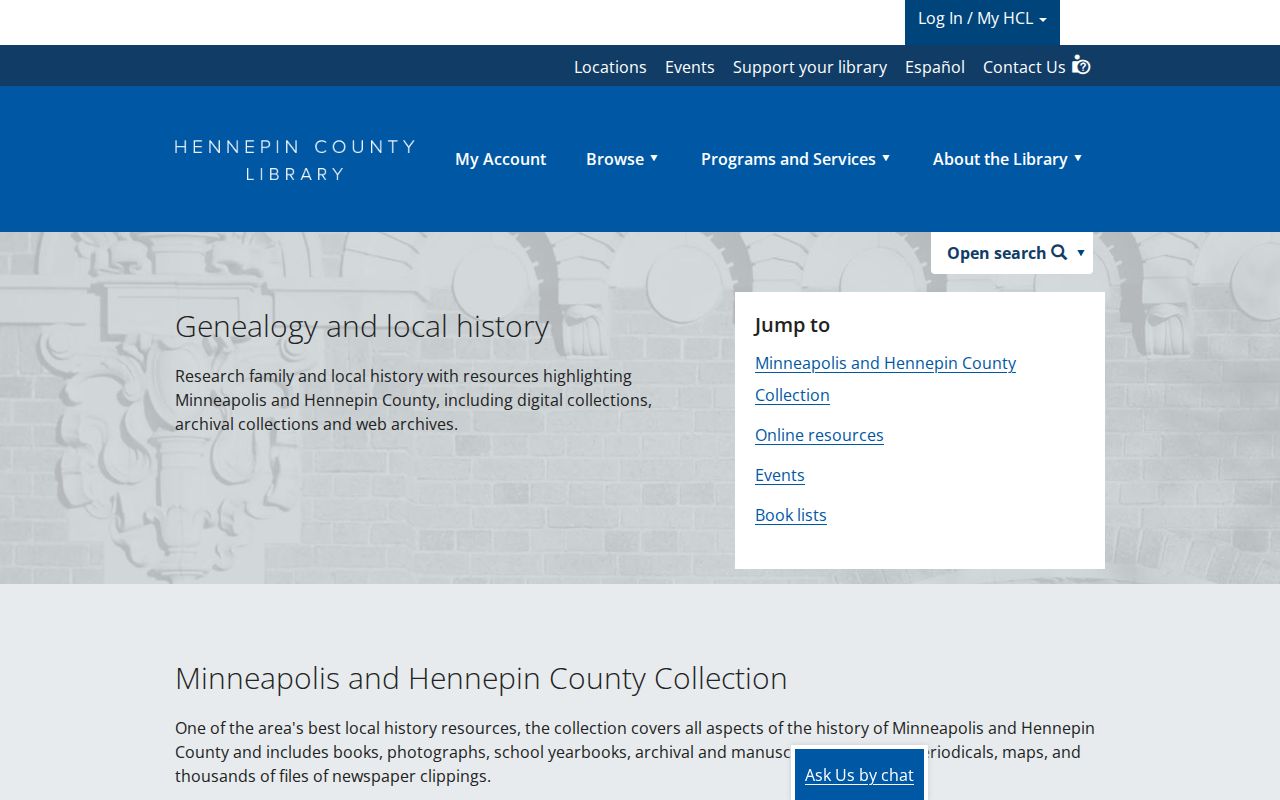
Brookdale is a Brooklyn Center research stop, not a claim that every historical series is digitized there. Ask for the collection and year, then preserve the call number or catalog reference with the notes.
For a difficult Brooklyn Center name, MNHS will search one city and name for up to five years. A historical-directory search is $10, a phone-book search is $10, and both are $20; $5 processing is included and nonrefundable. The service usually takes three to four weeks, with up to 12 weeks possible, and its form asks for the name, city, years, context, and search type.
Tracing Brooklyn Center City Directory Households
Use Brooklyn Center directory years to build a household trail, then test each observation against a record that answers a different question. A Brooklyn Center directory line can support historical name presence at an address. A parcel, PID, or recorded deed can test a property interest. A newspaper, permit, or census can add a dated event. Keep the historical shelf separate from current address-keyed records, which belong with the street directory.
- Search the known Brooklyn Center street number in its printed form, then check the preceding and following directory years.
- Save the exact Brooklyn Center line, page, year, volume, marker, phone, relationship notation, and business reference.
- Follow the same address backward and forward, allowing for a missing volume, a changed resident mark, or an altered street form.
- Pair the directory date with the closest census, newspaper, parcel, recorded instrument, or permit that addresses the same question.
- Keep ownership and household presence separate in the final notes.
When a Brooklyn Center person disappears, first test the coverage and name form. A move, a death, an omitted listing, and a change from a local directory to a telephone-only product can look alike in a short run.
Brooklyn Center Directory Era Markers
Brooklyn Center’s record trail shifts with the city itself. The Brooklyn Center municipality formed in 1911. The Brooklyn Center postwar building surge peaked in 1954–1959, and Brookdale Center opened in 1962. The city’s home-rule charter became effective in 1966. Those dates help place a Brooklyn Center address in a farm, buildout, or municipal-records context without turning a directory reference into current proof.
- 1911: Brooklyn Center municipal formation, with earlier names more likely in county and township sources.
- 1954–1959: Brooklyn Center’s peak postwar building period identified in Sigurd Edling’s local history.
- 1962: Brooklyn Center’s Brookdale Center opened after a 1955–1960 planning period.
- 1966: the Brooklyn Center charter took effect and the digitized historical-directory run begins.
- 2025: HCLib announced Brooklyn Center online access to the 1966–1982 series.
That farm-to-Brookdale transition is a useful research story because one place may appear first as a legal description or plat and later as a directory address. It is a reason to use dates, not a basis for assuming a particular household’s history.
Brooklyn Center Directory Companion Sources
When the city-directory trail stops, use a companion collection suited to the gap. The Hennepin History Museum research library takes appointments at 2303 Third Avenue South in Minneapolis, reachable at 612-870-1329; its research-library hours are Thursday and Friday 10–3 and Saturday 10–5. MNHS’s Gale Family Library adds newspapers, maps, and microfilm. These sources can help locate a place name, a map, or a dated notice before returning to directory years.
The Hennepin History research service describes the archive setting and appointment path.
Use an archive reference as a lead and cite the item actually consulted, because catalog descriptions do not prove that a person or address appears in a record.
The MNHS Sun Post title record identifies the Brooklyn Center edition from 1991–2018 and a merged edition after August 2018. Current issues are restricted to the Gale Family Library because of copyright.
The newspaper title history provides a dated local-news route after the directory run ends.
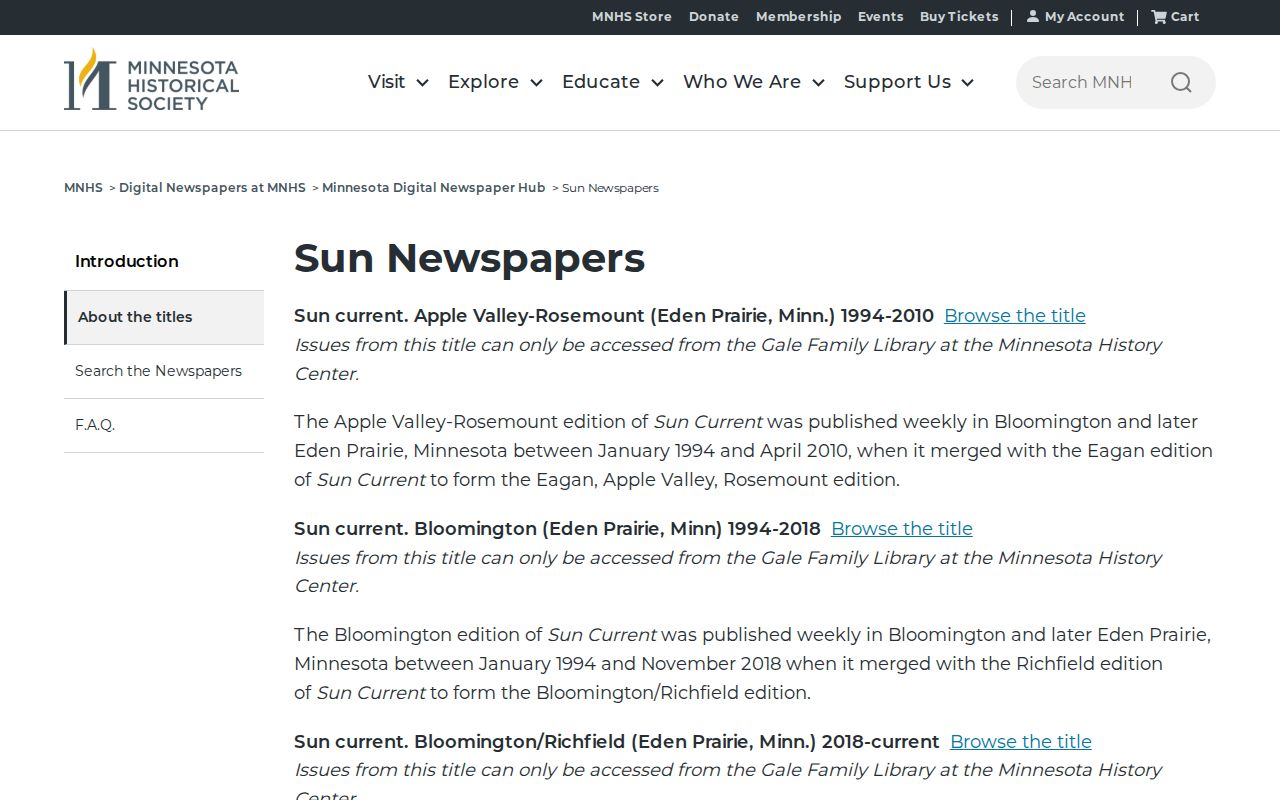
Newspaper notices can add a date or civic role, but they should be treated separately from a directory address and a recorded property interest.
Note: Copyright restrictions can change access conditions, so confirm the current Gale Family Library route before planning a Sun Post visit.
Limits of Brooklyn Center City Directories
City directories are historical snapshots. A listed name may be a household head, a spouse, an independent person, a subscriber, or a business reference depending on the volume. An address can change format across time, and a telephone book can leave out a household that appears in a city directory. Keep the page and year beside every observation.
Use the Minnesota Government Data Practices Act, Minn. Stat. ch. 13, and each custodian’s access rules when asking for public material. Historical research is appropriate for family history, estate questions, and local history. Do not use a directory find to track, harass, or harm a living person.