
Brooklyn Center Past Household Sources
Brooklyn Center past-household research changes with the era. Start at the current parcel and recorded-transfer layer, then choose the older source that fits the Brooklyn Center period. A county filing, a tax list, a telephone book, a historical directory, and a local notice each answer a narrower question. The table separates their coverage and limitations so a dated name is not mistaken for an ownership finding or a full household list.
| Source | Years | Where held | What it shows |
|---|---|---|---|
| Brooklyn Center naturalization lead | 1853–1942 | Hennepin and MNHS research collections | County-court filing lead, not city residence |
| Brooklyn Center assessment rolls | 1860–1894 | MNHS finding aids and records | Early land or taxpayer clue; incomplete |
| Brooklyn Center tax lists | 1860–1901, with sample years | MNHS finding aids and records | Landholding or taxpayer clue; gaps include 1876–1878 |
| Brooklyn Center telephone directories | 1927–1990s holdings | MNHS and library collections | Subscribers and printed address clues |
| Brooklyn Center city directories | 1966–1982 | HCLib ResCarta | Dated household, street, and business clues |
| Brooklyn Center Sun Post | 1991–2018 | MNHS newspaper collection | Notices, obituaries, and civic address stories |
| Brooklyn Center parcel, GIS, and RecordEASE | Current systems | Hennepin County | PID, legal description, current interest, and transfers |
| Brooklyn Center iMS permits | Current system | Brooklyn Center | Improvements and dated project records |
The Brooklyn Center current property view generally shows only about five years of recent recording history and may be incomplete. A full Brooklyn Center backward trail needs the recorder index, supporting documents, and older repositories when the date moves beyond the visible parcel links.
Brooklyn Center Past Residents Parcel Anchor
Before searching Brooklyn Center names, copy the current PID, legal description, situs address, and the current owner or taxpayer from Hennepin County Property Information Search. The PID is a 13-digit parcel identifier and the legal description usually carries farther back than a modern Brooklyn Center street line. Use the current owner as a possible grantee in the recorder index, but do not treat that person as the current occupant.
When a Brooklyn Center street line fails in an old record, return to the legal description, lot, block, addition, and PID. Historic plats and section maps can bridge a farm-era description or a changed street convention to the current parcel. No verified Brooklyn Center renumbering date was found, so a failed address match alone is not evidence of a renumbering.
The HCLib house-history research path shows how maps, plats, directories, permits, and newspapers can be used together.
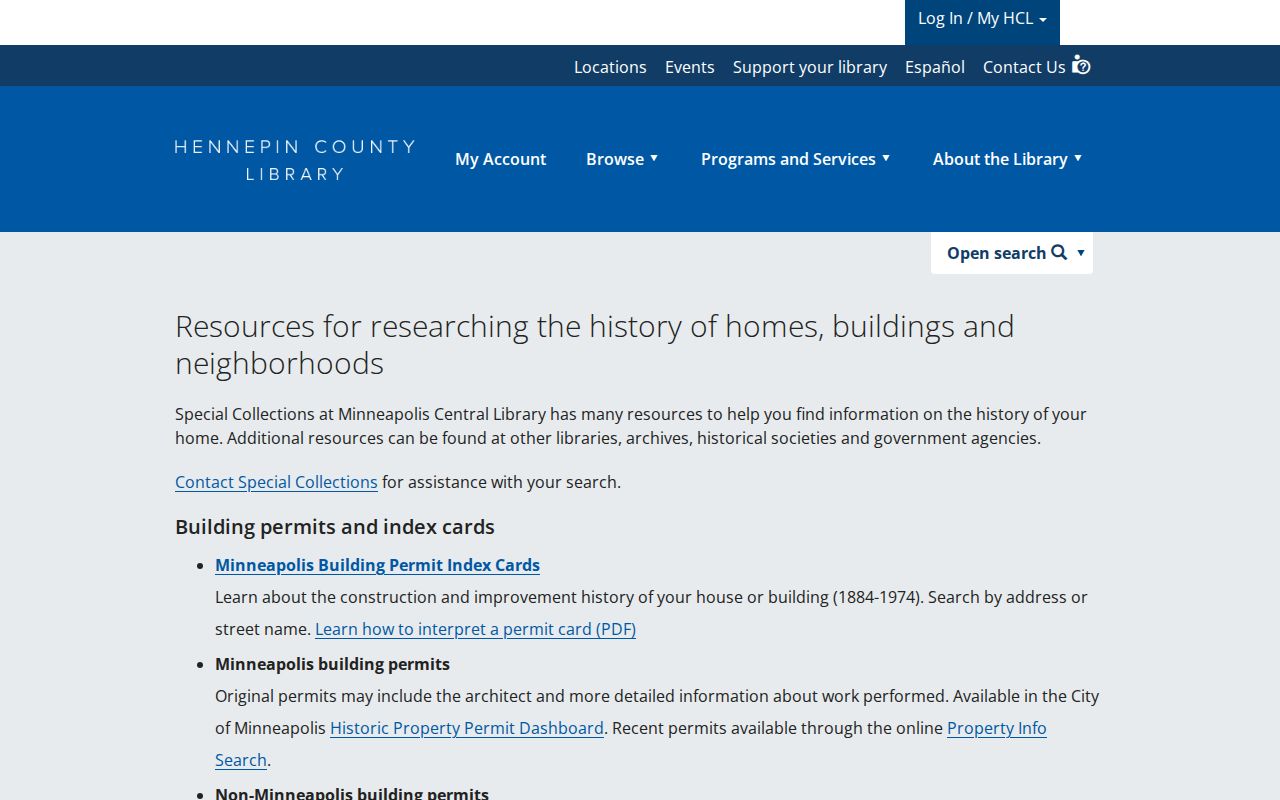
The Brooklyn Center house-history approach assigns each source a distinct role: maps clarify place, directories record a dated listing, recorded instruments document a filing, and newspapers add local context.
Note: Keep the current municipal label and the older printed label together until the PID or legal description confirms the same place.
Brooklyn Center Past Residents Deed Chain
Hennepin County’s RecordEASE Public Search is the public gateway for a limited Brooklyn Center index route. Search the Brooklyn Center current owner as grantee, then match the instrument to the PID or legal description rather than relying only on the name. Capture the instrument number, recording date, document type, grantor, grantee, legal description, and image status. A deed documents a recorded conveyance, not the day a person moved in.
- Start with the current Brooklyn Center PID and legal description from the property search.
- Find the Brooklyn Center current owner or entity as grantee and verify the legal description on the matching instrument.
- Record the Brooklyn Center grantor, grantee, document type, recording date, instrument number, and any certificate or abstract reference.
- Search that Brooklyn Center prior grantor as the next grantee, repeating the legal-description check at every link.
- Stop and investigate when the Brooklyn Center description changes, then locate the related plat, release, estate, or other instrument before proceeding.
- Grantor and grantee
- The grantor transfers a recorded interest; the grantee receives that recorded interest. Those roles can change from one document to the next.
- Chain of title
- A dated sequence of recorded interests connected by the same legal description, PID, or certificate reference.
- Legal description
- The lot, block, addition, section, or other land description used in recorded documents. It is usually more durable than a street address.
Keep a Brooklyn Center evidence ledger in this order: address as printed, PID, legal description, grantor, grantee, document type, recording date, instrument number, image status, and interpretation. It prevents a similarly named person or parcel from slipping into the chain.
Brooklyn Center Past Residents Title Check
For Brooklyn Center, Hennepin distinguishes Torrens land from abstract land. About 45% of county property is Torrens. A Torrens certificate is a current title and lien reference, while an abstract parcel can require title-company or attorney research for a complete title history. Preserve the Brooklyn Center certificate or abstract reference with the legal description so the next search follows the right record path.
Mortgage, release, assignment, lien, probate-related filing, quitclaim deed, plat, and deed entries may all appear in a Brooklyn Center chain. They do not all establish a household at the property. Read the instrument type before assigning a role to a name.
Note: A recent property-history link can point to the first instrument, but the county cautions that its roughly five-year view may be incomplete.
Brooklyn Center Recorded-Transfer Access
Brooklyn Center RecordEASE research has more than one access channel. The public index is limited and free; paid images in RecordEASE Pro are listed at $2.50. Hennepin also offers public computers in room SK-0353 at the Government Center during Monday through Friday hours of 8:00 a.m. to 4:30 p.m. The Hennepin land-title records access page describes online, counter, Virtual Recorder, and mail routes.
For a Brooklyn Center requested certified document or title, Virtual Recorder lists $10; a plat is listed at $15, with an additional $3 service amount described by the county. Mail and remote procedures can change, so verify the current payment and copy instructions with the recorder before ordering. A public index hit is still not an image or a title opinion.
The RecordEASE public-search gateway is the source shown below.
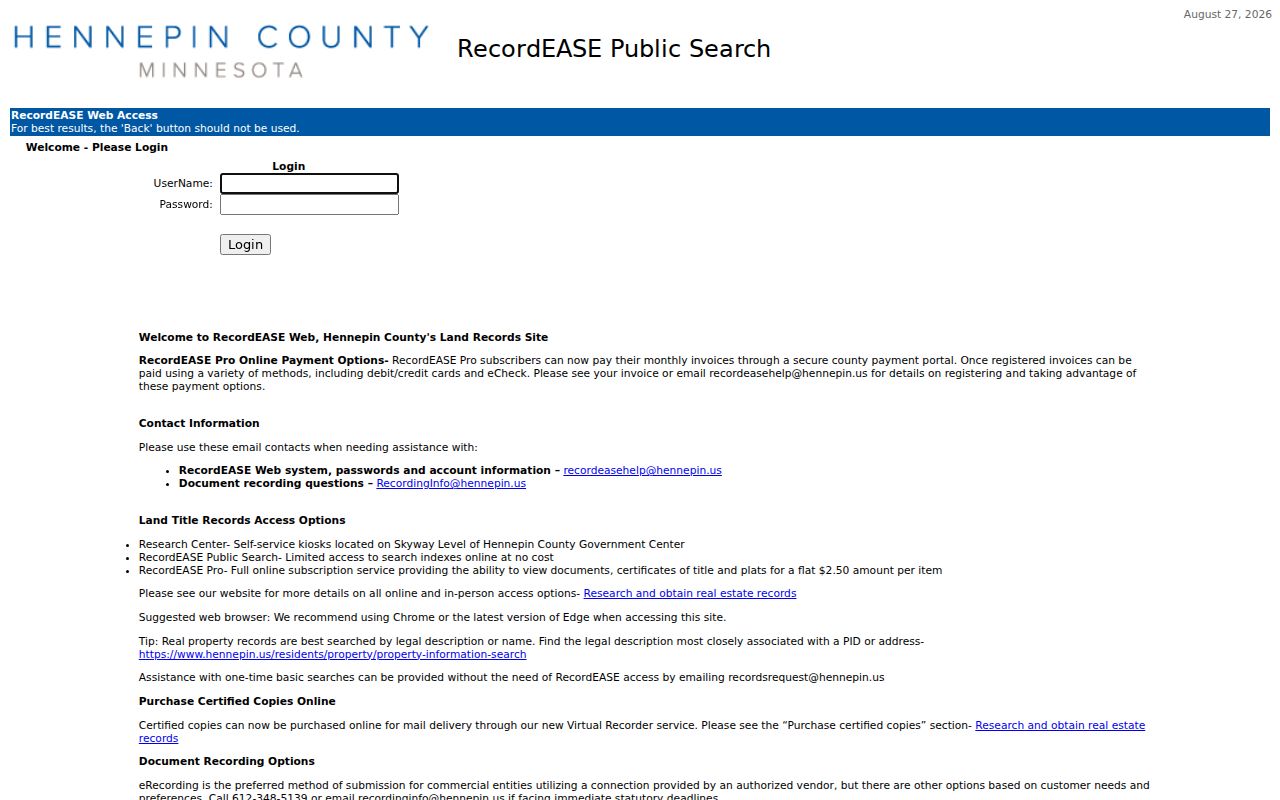
The gateway helps choose a Brooklyn Center grantor, grantee, or certificate route, but it does not supply a verified earliest online coverage year for every record.
Brooklyn Center Past Residents Household Trail
A Brooklyn Center deed chain tracks recorded interests. To identify past Brooklyn Center residents, pair it with directory and census evidence. The digitized Brooklyn Center historical volumes cover 1966–1982; Hennepin telephone directories span earlier and later holdings but list subscribers rather than every household. The detailed shelf and search conventions are on the Brooklyn Center historical directory page.
Address and year flow: current PID and legal description → deed date or plat era → directory address search → prior and next directory years → census or newspaper for the matching period → recorded instrument and permit date check.
- Search the historic Brooklyn Center address in the exact printed form and try adjacent directory years.
- Save the Brooklyn Center page, line, volume year, resident marker, phone, relationship notation, and any business reference.
- Pair the Brooklyn Center directory year with the closest available census or dated newspaper item, allowing for the different timing of each source.
- Compare the Brooklyn Center directory name with the deed chain without equating a printed name to an owner.
- Record why a Brooklyn Center missing year might be a coverage gap, telephone-only volume, changed address form, or changed marker.
The Hennepin ResCarta collection browser identifies the separate Brooklyn Center historical-directory series.
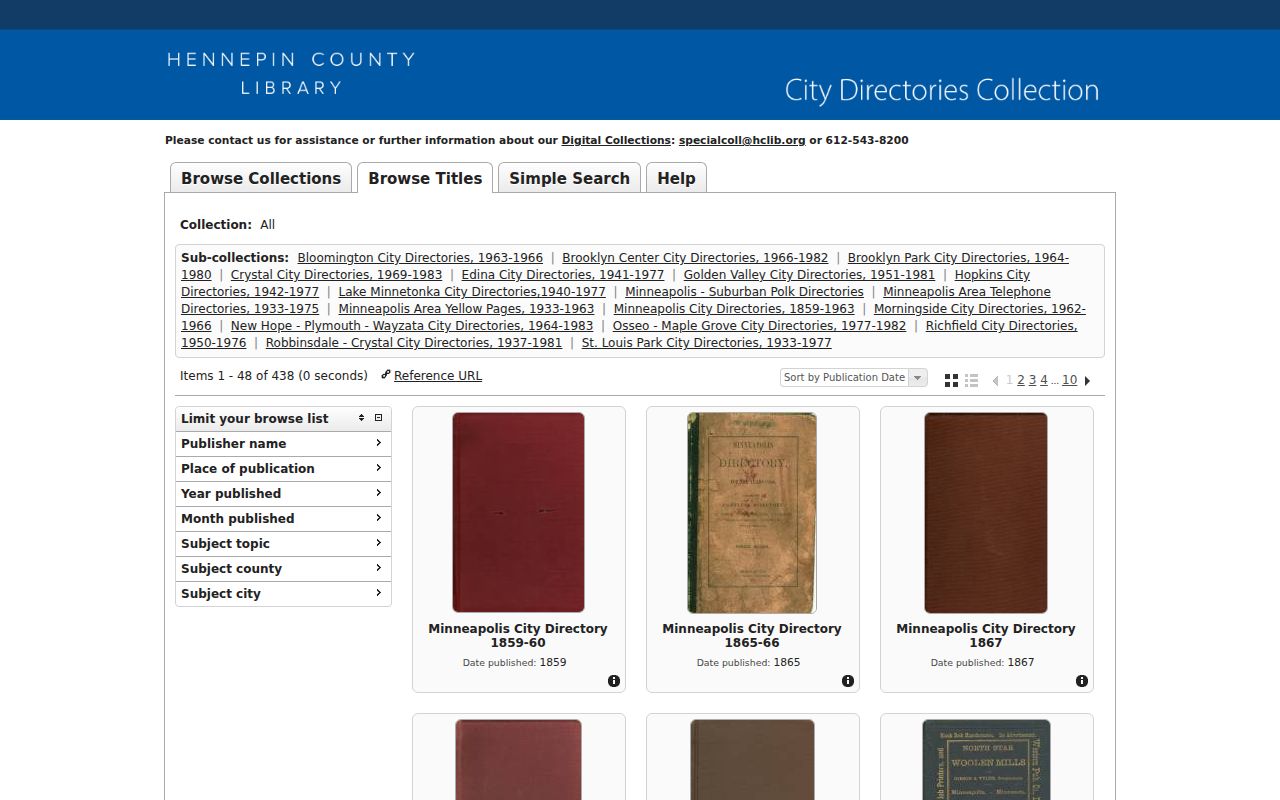
Use a Brooklyn Center directory address as a time-stamped household clue and preserve its volume key, especially where a leading h or r, a wildcard, or a previous and next hit is needed.
Brooklyn Center Past Address Archaeology
Brooklyn Center old location records may use a township or village label, farm reference, route, lot and block, addition, or abbreviated street. Brooklyn Center was established in 1911, while the 1966 charter is a later municipal marker. Postal labels, street abbreviations, ZIPs, parcel numbers, and plats can all change without a person moving. Preserve each Brooklyn Center address exactly as printed before normalizing it.
When an old Brooklyn Center street will not resolve, search RecordEASE using the legal description or lot, block, and addition. Then inspect historic plats or section maps. Hennepin GIS is a current starting geometry, not a legal survey. A current street line that does not match an old record is a research problem to document, not a reason to infer a specific citywide renumbering.
Note: A ZIP, postal-city label, or modern map pin is weaker historical evidence than the recorded legal description and matching plat.
Brooklyn Center Previous Residents Era Story
Brooklyn Center’s farm-to-suburb shift can make a Brooklyn Center address trail look discontinuous. Local history places peak postwar construction in 1954–1959 and the opening of Brookdale Center in 1962. An early land reference may therefore lead into a mid-century plat, a 1966–1982 directory entry, and later parcel records. That sequence is a way to choose sources by era, not proof about any particular family.
- Farm and county era: Brooklyn Center naturalization, assessment, tax, plat, and cemetery material can supply early place clues.
- Postwar buildout: Brooklyn Center deeds, tax evidence, plats, phone books, and later directories become more useful by address.
- Brookdale era and after: Brooklyn Center directories, permits, recorded instruments, and local notices can be checked against one another.
The 2026 Brooklyn Center Mound Cemetery planning record, tied to PID 34-119-21-12-0078, is a separate example of a historic place connected to a current parcel. It should not be used as a shortcut for a different address or as a generic occupancy record.
Brooklyn Center Past Residents Date Checks
For a later Brooklyn Center dated clue, the Brooklyn Center Sun Post edition runs from 1991–2018 in the MNHS title record, with a merged edition afterward. It can point to legal notices, obituaries, civic names, or an address story. Current issues are restricted to the Gale Family Library because of copyright. Brooklyn Center iMS can add permit, inspection, zoning, or code context for an address, but a permit applicant or project contact is not automatically a resident.
Use a Brooklyn Center newspaper, permit, and deed as three separate date systems. A directory may place a name before a conveyance is recorded. A permit may follow a transfer. A newspaper can name an estate representative. Each can reinforce the Brooklyn Center timeline without collapsing those roles into one conclusion.
The Hennepin County Library genealogy and local history service also connects Brooklyn Center researchers with Brooklyn Center maps, directories, newspapers, and family-history collections.
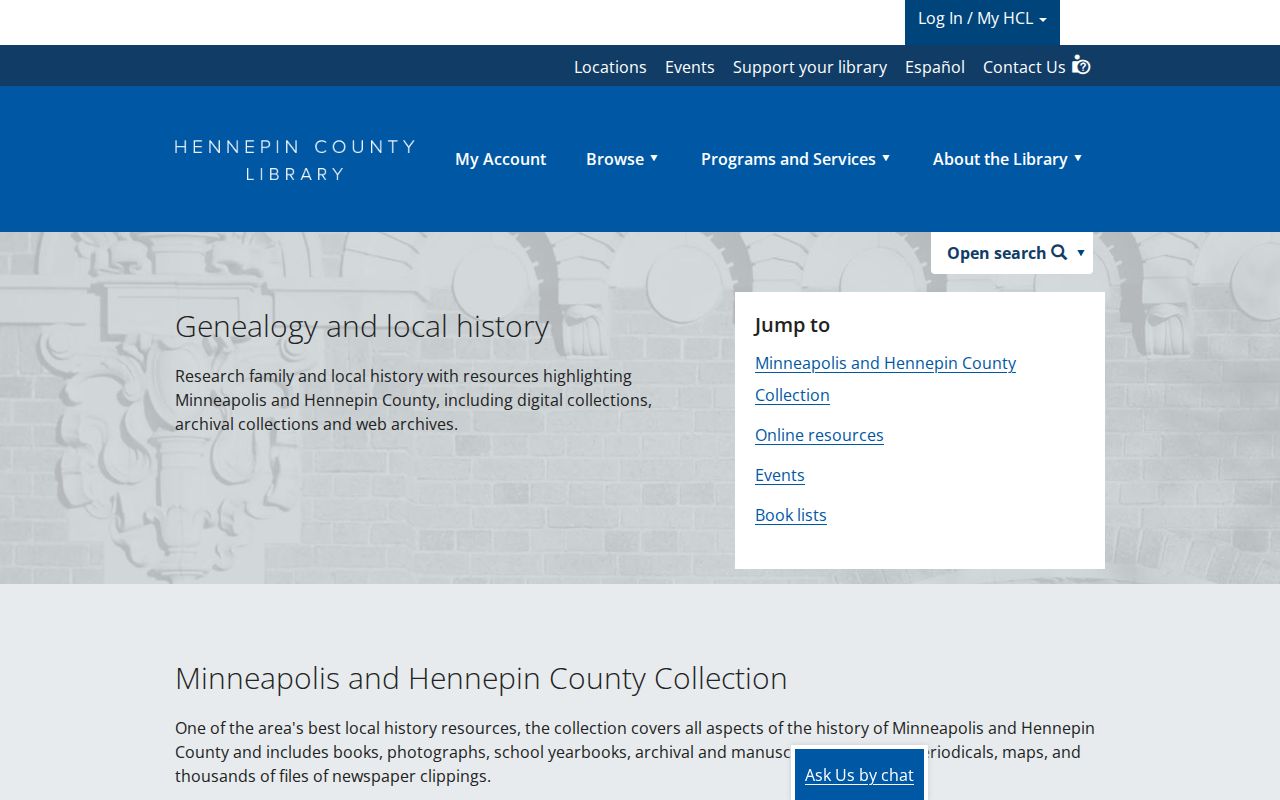
Use that Brooklyn Center library route to compare a dated directory or newspaper clue with a map or collection reference before assigning it a role in the address trail.
Note: A public permit identifies a dated project role, which should remain distinct from a finding that someone lived at the address.
Brooklyn Center Past Residents Boundaries
Brooklyn Center past-resident research works best for family history, estate questions, and understanding the history of a place. It is not a claim that every prior name remains tied to the Brooklyn Center address. Respect private, sealed, and safety-protected records, and do not try to reconstruct a protected location from a substitute address or fragmentary sources.
Lawful use. Minnesota public-record access is governed by the Minnesota Government Data Practices Act, Minn. Stat. ch. 13. Do not use historical address findings to monitor, harass, or harm any living person.