
Finding Brooklyn Center Residents
A useful residents directory search begins by deciding what the record needs to establish. A street address works best in Hennepin County Property Information Search, which can lead to a parcel identifier and the owner or taxpayer shown for that parcel. A full name and a dated address can then be tested in the recorder index, court system, voter confirmation tool, historical directories, or a carefully described city request. These are separate observations. A taxpayer, an owner, an applicant, and an old directory subscriber may be different people.
For Brooklyn Center research, keep the exact address, date checked, record type, and result together. That simple habit makes a same-name error easier to spot and leaves a clear path back to the Brooklyn Center or county custodian when an older record is not online.
- Use the Brooklyn Center address or PID in the county property search and save the situs address, owner or taxpayer line, legal description, and PID.
- Open the Brooklyn Center parcel in the county map and check that the property is actually in Brooklyn Center rather than only using a Brooklyn Center postal label.
- Search Brooklyn Center recorded interests by the relevant grantor or grantee in RecordEASE, matching the legal description before treating a document as part of the trail.
- For an historic Brooklyn Center household, check the dated directory and telephone-directory holdings at the library before drawing a current conclusion.
- When a Brooklyn Center city file is needed, ask for the address, date range, department, and record class through the City Clerk instead of asking for a broad list of people.
Brooklyn Center Parcel Starting Point
Hennepin assesses Brooklyn Center property and reports more than 8,986 parcels in the city. The public property search accepts an address, a 13-digit PID with or without punctuation, or a legal addition. Address mode needs both a house number and at least three street-name characters; a unit is optional but can matter at a multi-unit property. Addition mode accepts the addition name plus optional lot and block, useful when an old deed does not resemble a modern street address.
The Hennepin property-search portal is the best first stop for a current Brooklyn Center parcel connection. Its public descriptions identify owner or taxpayer information, tax and assessment information, a legal description, sales, and recent recording links. The county says the public tool is for individual parcels, not bulk collection. A Brooklyn Center property owner or mailing recipient is not necessarily the person who occupies the property.
The property-search home screen shows the address, PID, and legal-addition paths used for a Brooklyn Center residents directory search.
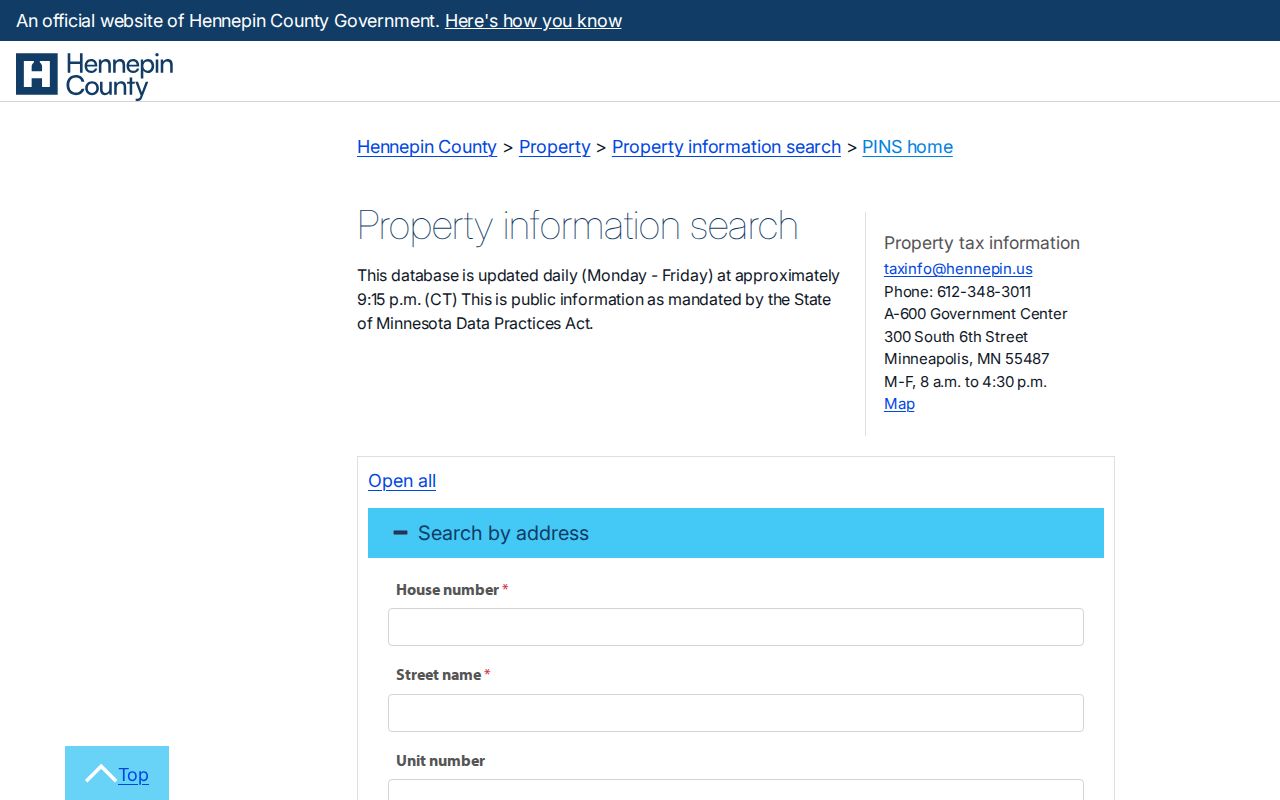
Use the returned Brooklyn Center PID and legal description as the stable bridge to maps, recorded documents, and older plat references.
| Property-search field | When to use it | Format noted by Hennepin |
|---|---|---|
| Brooklyn Center house number and street | A current street address | Street needs three or more characters; common street abbreviations work |
| Brooklyn Center unit number | A unit-specific address | Optional, but preserve it when present |
| Brooklyn Center Property ID | A parcel already identified | 13 digits, with or without dashes or spaces |
| Brooklyn Center lot, block, addition | An older legal description | Addition name needs three or more characters; lot and block may be padded |
Brooklyn Center Records Offices
Brooklyn Center evidence sits with different custodians. The Hennepin recorder maintains recorded land instruments for Brooklyn Center. The county property system supplies the Brooklyn Center parcel spine. The Secretary of State operates the registration confirmation tool, and Brooklyn Center city staff route municipal records through the Clerk and departmental systems. Each office answers a narrower question, so a strong residents directory result retains its source instead of blending roles together.
Hennepin Recorder / Registrar
300 S Sixth St, MC074
Minneapolis, MN 55487
612-348-5139
Hennepin Property Information
A-600 Government Center
300 S Sixth St, Minneapolis, MN
612-348-3011
Minnesota Elections Office
State registration confirmation
Minnesota voter system
Statewide online service
Brooklyn Center Recorded Interests
The Hennepin Recorder and Registrar of Titles place Brooklyn Center recorded conveyances in the county land-record system. RecordEASE lets a searcher work from a grantor or grantee, choose person or entity, and use Exact, SoundEx, or Alias matching. Match every apparent Brooklyn Center result back to the parcel legal description. A deed indicates a recorded conveyance, not a move-in date, and a mortgage shows a transaction interest rather than occupancy.
Hennepin describes the public index as limited, while Pro document images and Torrens certificates are listed at $2.50. Recent recording history in the property portal usually reaches only the preceding five years and may be incomplete. The county also offers public search computers at SK-0353 on the Government Center skyway level, Monday through Friday from 8:00 a.m. to 4:30 p.m. Virtual Recorder offers certified document or title copies for $10, and certified plats for $15, plus a $3 service fee. Mail-copy options remain available through the recorder.
Hennepin’s land-title access page sets out the RecordEASE, copy, and Virtual Recorder routes.
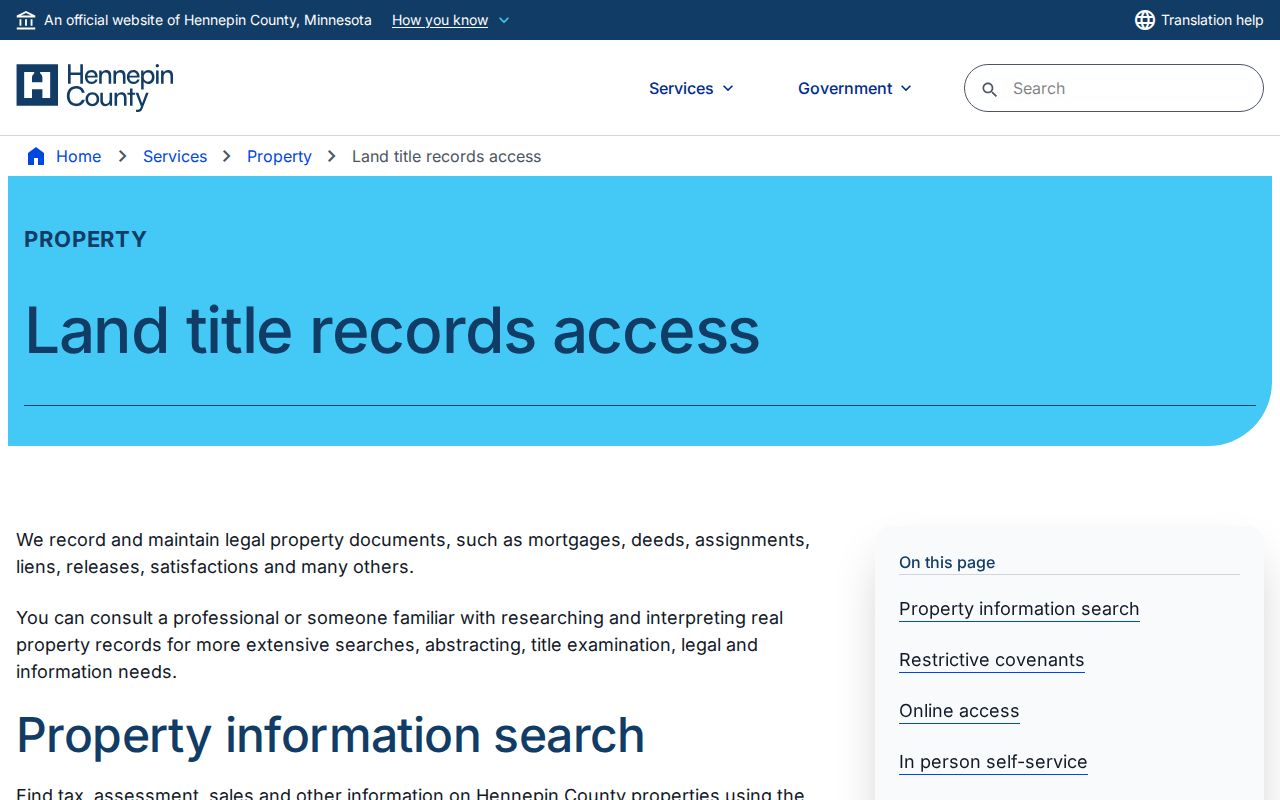
That choice of channels matters when a Brooklyn Center free-index entry points to a document whose image or certified copy is needed for verification.
Brooklyn Center Municipal Addresses
Address-specific Brooklyn Center municipal material can add a date and role that county property records do not show. Brooklyn Center’s Laserfiche WebLink holds many scanned city records. Its public instructions describe phrase search and a year-first browse path for Council minutes; a document may need conversion to PDF before it can be searched or printed, with a 500-page conversion maximum. Brooklyn Center says it has followed the State General Records Retention Schedule since 1987, while older material may sit in different scanned or retained series.
For permits, inspections, zoning, and code matters, the city directs users to iMS. Public fields were not exposed in the research session, so a permit result should be read as it appears rather than assumed. The Clerk’s data-request route, including JustFOIA, is the fallback for a defined address, date range, and department. Public requests may be anonymous, though the city needs contact information to resolve questions, fees, or delivery. Other requests are typically answered within 30 days; the city advises resubmitting pre-2025 requests that received no acknowledgement.
Brooklyn Center Laserfiche WebLink is the city repository shown here.
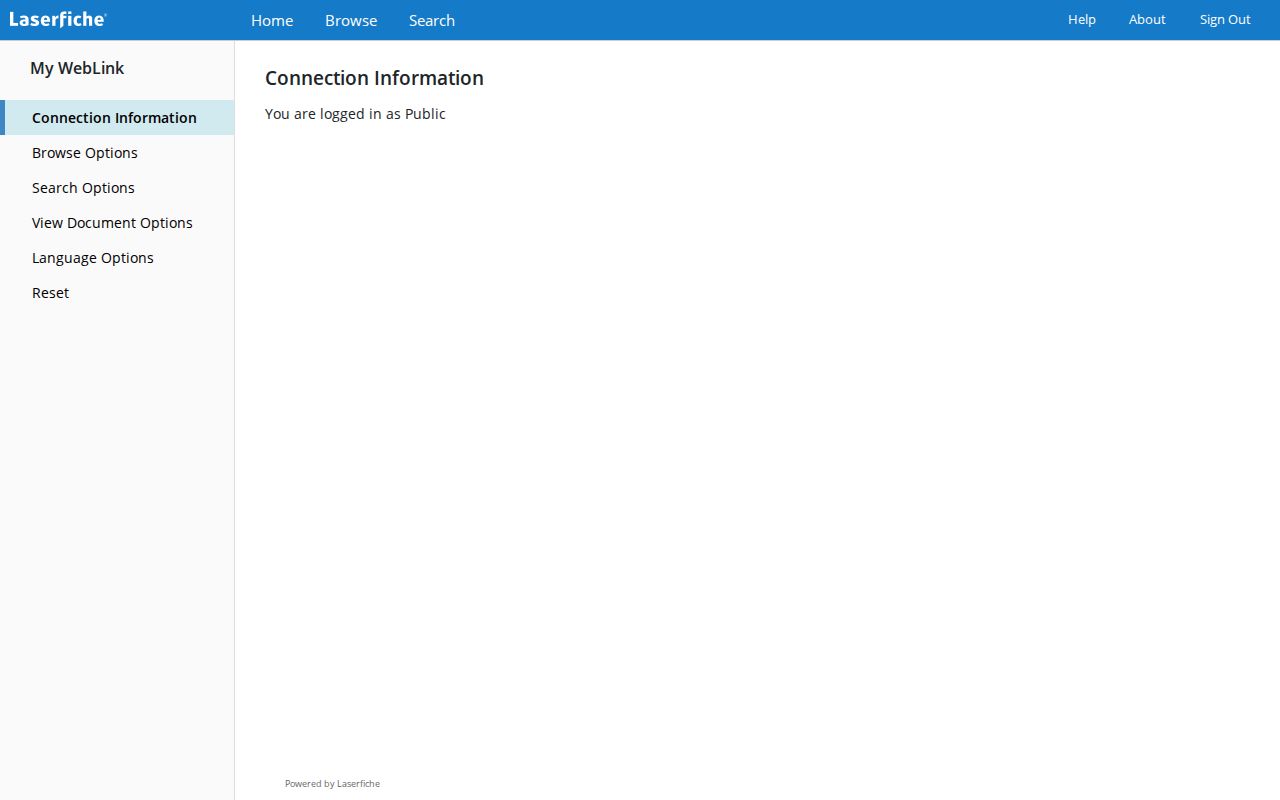
Use a Brooklyn Center meeting date, project address, PID, or document type to keep a municipal search tied to the actual record sought.
Current Brooklyn Center Resident Records
No current source is a complete list of Brooklyn Center residents. The Brooklyn Center parcel record is strongest for a current ownership or taxpayer lead. The deed index is a record of Brooklyn Center land parties. The voter lookup is a restricted confirmation tool, and Brooklyn Center city agendas or permits identify public roles tied to a date. Treating each source as a different type of evidence prevents a property owner, public applicant, and household member from being mislabeled as the same thing.
| Current source | What it can show | Custodian | Access path |
|---|---|---|---|
| Brooklyn Center Property Information Search | Brooklyn Center parcel, situs, owner or taxpayer, tax and assessment context | Hennepin County | Public individual-parcel portal and counter |
| Brooklyn Center RecordEASE index | Recorded Brooklyn Center grantors, grantees, and instrument trail | Recorder / Registrar | Limited public index; image and copy channels vary |
| Brooklyn Center voter registration lookup | Registration confirmation after required identity details | Minnesota Secretary of State | Public tool subject to statutory limits |
| Brooklyn Center Laserfiche and city requests | Dated Brooklyn Center meeting, permit, or civic participation record | Brooklyn Center | WebLink, iMS, or a defined data request |
Official records and commercial listings are not equivalent. A custodian can identify the record’s date, scope, and restrictions. A commercial category may combine old or mismatched material and can lack the original context. Begin with the county, state, city, library, or archive source, then preserve enough detail to recheck it.
Brooklyn Center Voter Confirmation
Minnesota’s voter registration lookup is designed to confirm a Brooklyn Center registration, not to supply a general address list. It requires first name, last name, date of birth, and either ZIP information or county, city or township, house number, and street. A unit field is available where needed. The system says it updates nightly, and a new Brooklyn Center application can take up to 14 days to appear. A mismatch should be handled through the state’s instructions rather than by guessing at more personal details.
Minn. Stat. §201.091 governs voter-list fields and restricts use, redistribution, publication, sale, loan, and surrender of list copies. A signed safety request can withhold public voter information, and Safe at Home participants use a substitute address. A record that is absent or limited may reflect a rule, not an error.
Minnesota’s voter-registration lookup shows the state’s ZIP and county search paths.
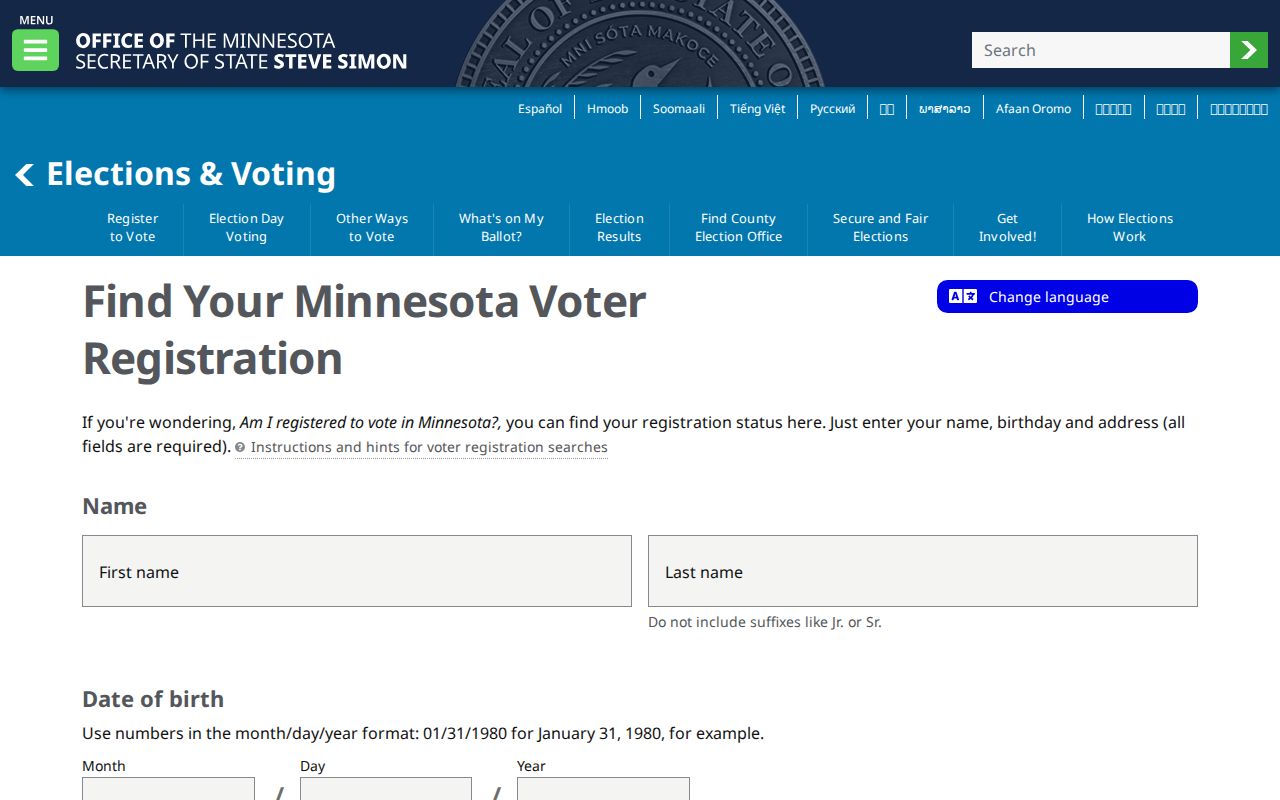
Use its Brooklyn Center result as a time-specific confirmation and do not republish voter information as a neighborhood roll.
Brooklyn Center Court Verification
Minnesota Court Records Online, or MCRO, is a statewide district-court gateway. Select Hennepin County for a Brooklyn Center question and use the Name, Case Number, Citation Number, or Attorney paths as the question requires. Name search distinguishes person from business and can use a last name, optional first or middle name, date of birth, filing-date range, case category, and county. Sounds Like and a trailing wildcard are alternate techniques, not tools to combine.
A remote result is unofficial and incomplete. The Register of Actions is the chronological case spine, so record the case number, party role, filing date, case type, hearings, judgments, disposition, and visible document names. Not all public records appear remotely. Juvenile, protection-order, harassment-restraining, and selected mental-health matters have special restrictions. Court administration, rather than an online screen, supplies certified copies when proof is required.
MCRO’s case-search screen displays the search controls used for Hennepin County.
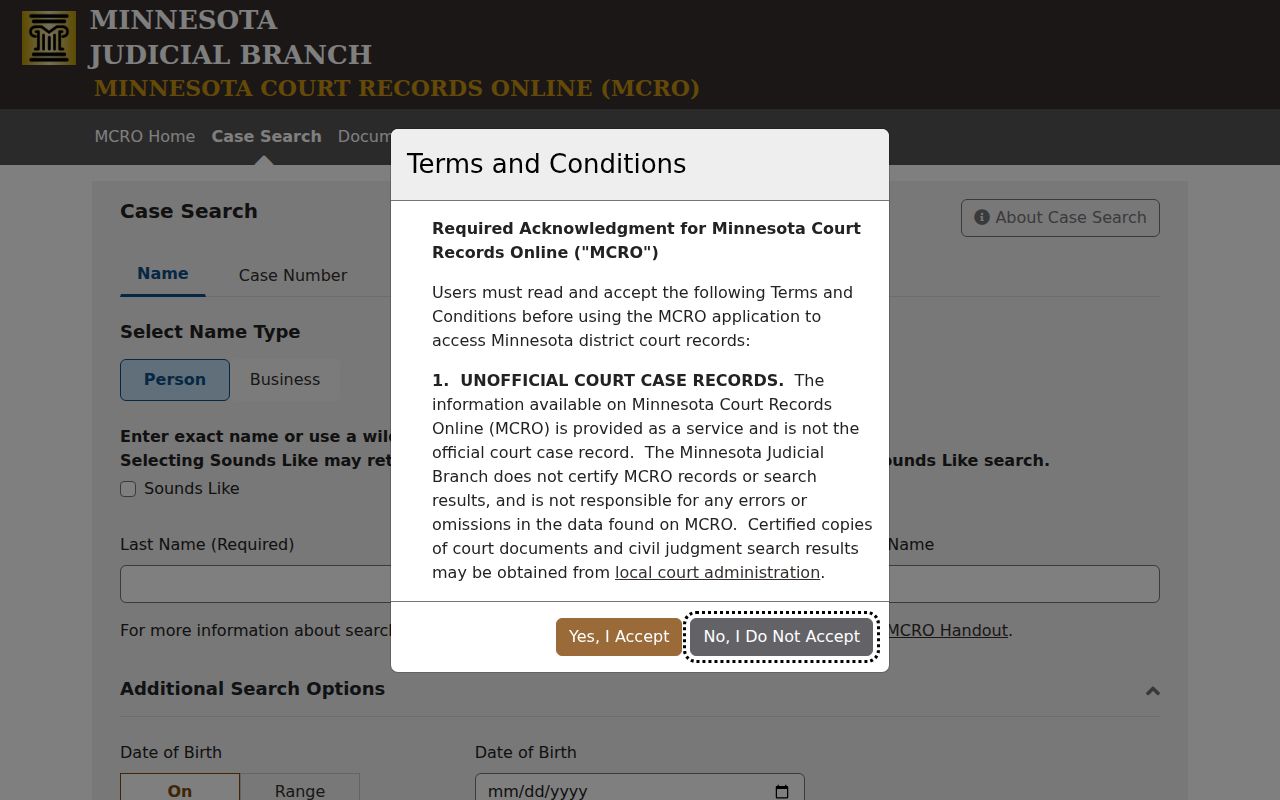
A party name or case category does not establish a Brooklyn Center address, Brooklyn Center identity, or outcome without supporting record details.
Brooklyn Center Historical Directories
Brooklyn Center’s historical directory shelf is unusually useful for dated Brooklyn Center household leads. ResCarta identifies a digitized Brooklyn Center city-directory run from 1966 through 1982. The Hennepin telephone-directory finding aid adds separate runs from 1927 and 1928, 1949, 1953, 1957 through 1980 with some yellow-page gaps, and later holdings. A telephone book is not a Brooklyn Center city directory or a census; it records subscribers, while directory entries can carry other historical notations.
HCLib’s digital search tips allow case-insensitive searches and non-leading asterisk or question-mark wildcards. Some suburban address lines need a leading h or r, and volume keys explain marks that vary by issue. The fuller collection and entry-reading method belong in the Brooklyn Center city directory collection, while the relevant directory year should always stay attached to any name or address observation.
- Roll
- A maintained list or dataset with a defined scope, such as a registration list, not a universal list of residents.
- Index
- A search aid pointing to records or names; it may not include the underlying document image.
- Criss-cross directory
- A reverse-address directory used to find the names printed at an address or along a street in a given year.
- Parcel
- A defined piece of land identified by a PID and legal description in the county property system.
Brooklyn Center Directory Scans
HCLib announced the 1966–1982 Brooklyn Center directory addition in a 2025 Special Collections update. That digital run changes the practical starting point for a name or old address: search online first, then use print, microfiche, staff research, or archival collections where a year is missing. The accessible notice does not name a publisher, so the scans should be described by their collection and years rather than assigned a publisher without checking item metadata.
HCLib’s digitized directory collection is one path for directory and reverse-address research.
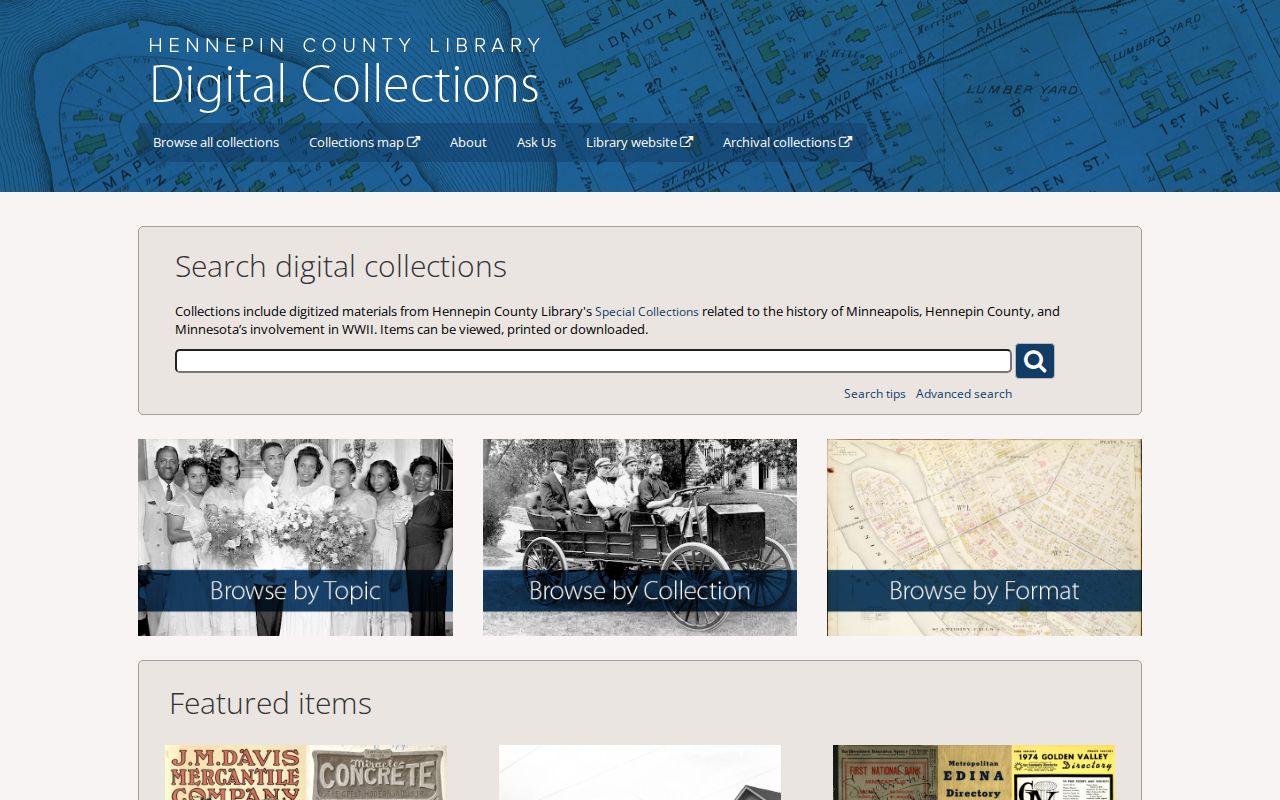
Pair a scanned Brooklyn Center address line with a deed, tax, census, newspaper, or permit date before treating it as a household conclusion.
Brooklyn Center Privacy Stops
Minnesota’s Government Data Practices Act begins with a presumption that Brooklyn Center government data are public unless another law classifies them differently. Minn. Stat. §§13.01 and 13.03 frame public inspection and copies, while §13.04 addresses data-subject rights and §13.045 protects Safe at Home data. Court rules, vital-record rules, and the voter statute can impose separate limits. A Brooklyn Center city request cannot replace a court request, and a visible record does not erase the rule that governs later use.
Birth access depends on status and relationship. Death informational copies are more open than certified copies. MCRO excludes or limits several categories remotely. When a custodian identifies a record as sealed, confidential, private, or safety-protected, preserve that explanation and stop rather than trying to reconstruct the missing fact from other sources.
Brooklyn Center Records Timeline
Brooklyn Center’s record trail crosses several eras. Brooklyn Center municipal formation dates to 1911, and the Brooklyn Center home-rule charter took effect in 1966. The city’s history describes a shift from farm country to postwar suburban development, with peak building activity identified for 1954 through 1959 and Brookdale Center opening in 1962. That Brooklyn Center history helps explain why an older address may turn up in county tax, deed, telephone, or plat material before it appears in a city system.
Modern city retention practice dates to 1987, and the historical directory scans became newly available in 2025. Ask the City Clerk about older municipal series when WebLink stops, then check Hennepin, HCLib, Hennepin History Museum, or Minnesota Historical Society finding aids for the era in question. A missing entry is a research signal, not proof that a person or place never existed.
Minnesota Health License Lookup is another current corroboration layer when a credential number or status is relevant.
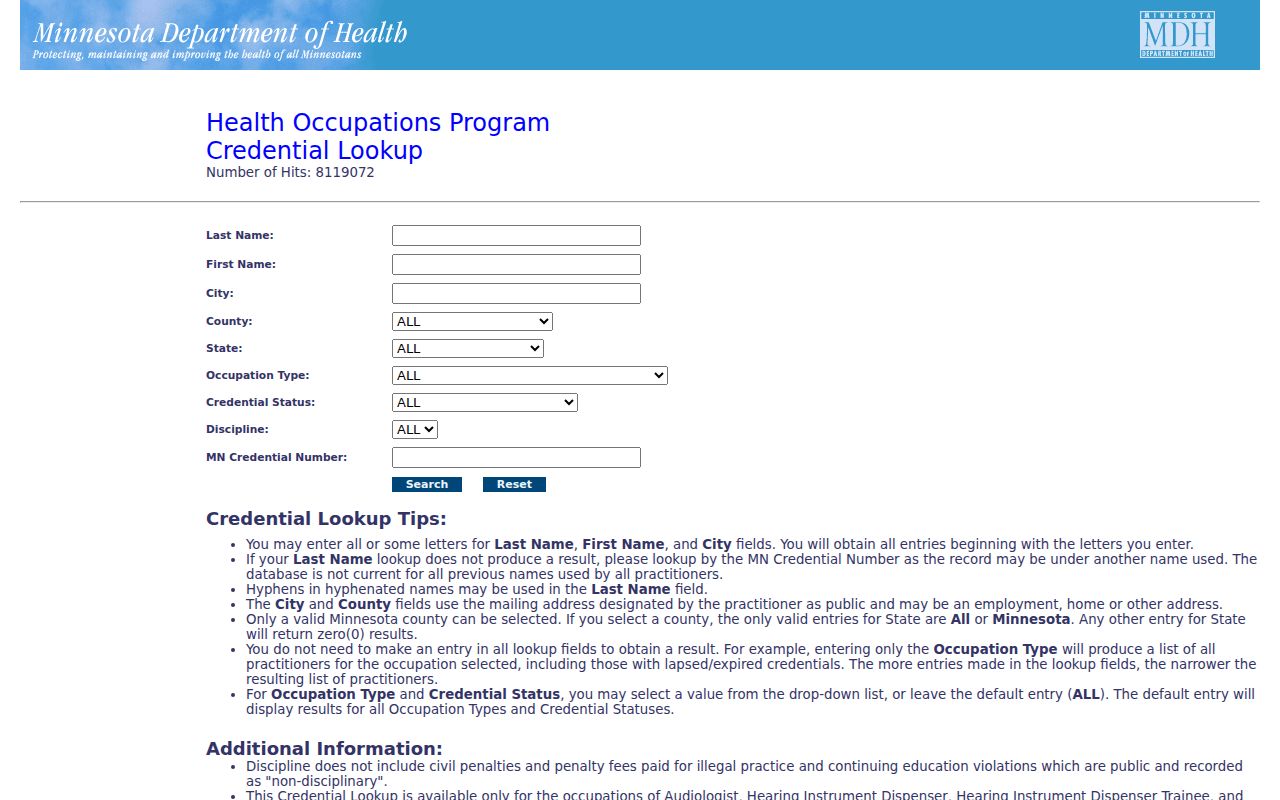
A professional credential may connect a name to a licensed status, but it does not establish a Brooklyn Center residence.